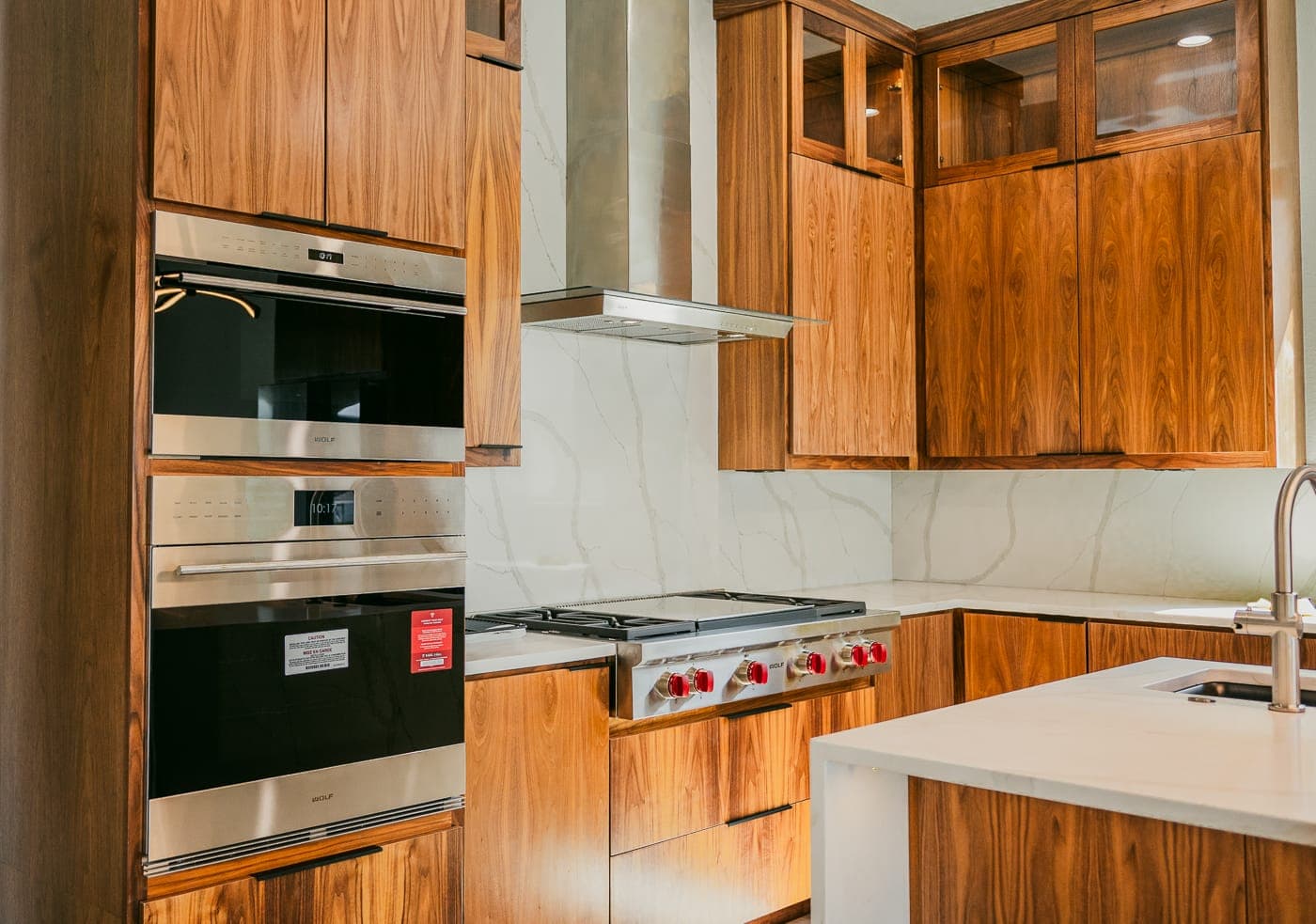
How to Vet a Kitchen Remodeler in Southlake
The questions that separate a real remodeling contractor from a risk: license and insurance, payment schedules, contract red flags, and how to compare three bids that look nothing alike.

Texas does not license general contractors at the state level. Electricians and plumbers are licensed; the person managing your $90,000 kitchen may not be. That puts the vetting on you.
Here is what actually matters, in order.
The non-negotiables
1. General liability insurance and workers' compensation. Ask for a certificate of insurance sent directly from their insurance agent, not a PDF forwarded by the contractor. A COI is easy to fake and easy to verify. If a worker is hurt in your kitchen and the contractor has no workers' comp, exposure can land on your homeowner's policy.
2. Licensed trades on the actual job. The GC does not need a state license. The electrician and plumber do. Ask who they are and get license numbers. Verify them with the Texas Department of Licensing and Regulation and the Texas State Board of Plumbing Examiners. Both take about two minutes online.
3. A written contract with a real scope. "Kitchen remodel: $85,000" is not a contract. You want the cabinet line and door style, counter material and edge profile, tile, fixtures, appliance model numbers, an allowance schedule, a payment schedule tied to milestones, a start date, an estimated completion window, and a written change-order process.
4. A sane payment schedule. A deposit to hold a slot and order materials is normal. A large upfront payment before any work begins is the single biggest red flag in residential remodeling. Payments should track completed milestones (after demo and rough-in, after cabinets are set, at substantial completion), with a final payment held until the punch list is done.
Questions that reveal the most
- "Who is on site every day, and who do I call?" You want a named project manager, not a rotating cast.
- "Are your crews employees or subs?" Either can be excellent. Long-term subs the GC has used for years are usually better than employees hired last month. What you are listening for is whether they can name them.
- "Walk me through a job that went wrong." Everyone has one. Anyone who claims otherwise is either new or not being straight with you. Listen for how they fixed it and who paid.
- "What is in your allowances?" Low allowances are how a bid gets artificially cheap. If the tile allowance is $4/sq ft and you already picked $12 tile, that bid is not what it appears to be.
- "How do you handle change orders?" Written, priced and signed before work proceeds. Verbal change orders are how relationships end.
- "Can I see a job in progress?" Finished-project photos are curated. An active site tells you about protection, dust control, cleanliness and how the crew treats a house.
Comparing three bids that look nothing alike
They will not be comparable, and that is the point. Before you compare numbers, normalize the scope:
- Same cabinet line, construction and overlay (see the cabinet guide)
- Same counter material, thickness and edge
- Same allowances for tile, fixtures, lighting and hardware
- Permits and inspections included or excluded. Get this in writing
- Demo, dumpster and final clean included or not
- Contingency handling for what is found behind the walls
Then be suspicious of the low bid. A bid meaningfully below two others is usually missing scope, carrying low allowances, or planning to make it up in change orders. The cheapest bid frequently becomes the most expensive project.
Red flags
- Pressure to sign today, or a discount that expires
- Large cash payment requested up front
- No written contract, or a one-page contract
- Asking you to pull the permit for work they are performing
- No physical business address
- Cannot produce a COI from their agent
- Reviews that are all five stars, all recent, and all vague
Where to look them up
- Better Business Bureau and Google reviews. Read the negative ones and, more importantly, the responses
- Tarrant County and Denton County court records for judgments and liens
- Neighborhood groups: Nextdoor and Southlake Facebook groups will tell you things reviews will not
- Ask for three references from the last six months, and call them. Ask what went wrong and how it was handled
Use the list
Ask every bidder every question on this page. A good remodeler has heard them all and answers without flinching. A contractor who is bothered by the list is telling you something.
For what happens when these questions get skipped, read why the cheapest contractor costs the most and the remodel horror stories.
Frequently asked questions
Do contractors need a license in Texas?
General contractors are not licensed at the state level in Texas. Electricians and plumbers are, through the Texas Department of Licensing and Regulation and the Texas State Board of Plumbing Examiners. Ask for the license numbers of the trades actually doing the work and verify them online; both take about two minutes.
How much deposit should I pay a contractor?
A deposit to hold a slot and order materials is normal. A large upfront payment before any work begins is the single biggest red flag in residential remodeling. Payments should track completed milestones (after demo and rough-in, after cabinets are set, at substantial completion), with a final payment held until the punch list is done.
What should be in a remodeling contract?
The cabinet line and door style, counter material and edge profile, tile, fixtures, appliance model numbers, an itemized allowance schedule, a payment schedule tied to milestones, a start date, an estimated completion window, and a written change-order process. 'Kitchen remodel: $85,000' is not a contract.
Why is the lowest bid usually a problem?
Because it is rarely the same scope. Low bids are typically missing work, carrying artificially low allowances, or planning to recover margin through change orders. Before comparing numbers, normalize the cabinet line and construction, the counter material and edge, and every allowance. Then the real comparison appears.
How do I verify a contractor is insured?
Request a certificate of insurance sent directly from their insurance agent, not forwarded by the contractor. You want general liability and workers' compensation. If a worker is injured in your home and the contractor carries no workers' comp, that exposure can land on your homeowner's policy.
What are the clearest red flags?
Pressure to sign today or a discount that expires. A large cash payment requested upfront. No written contract, or a one-page one. Asking you to pull the permit for work they are performing. No physical business address. Inability to produce a certificate of insurance from their agent. And reviews that are all five stars, all recent, and all vague.
Related posts
- Hiring & Permits
Why Not to Hire a Chuck in a Truck for Your Kitchen Remodel
What goes wrong when you hire the cheapest or least experienced contractor for a Southlake kitchen remodel: no insurance, no permits, liens, lost deposits and work that has to be redone.
- Hiring & Permits
Kitchen Remodel Horror Stories, and the Warning Sign That Came First
Six real remodels that went wrong, told by the homeowners, three of them in Texas: an abandoned kitchen, a missing beam, skipped permits and a sink three inches too small. Each had a warning sign first.
- Hiring & Permits
Do You Need a Permit for a Kitchen Remodel in Southlake?
When a Southlake kitchen remodel needs a building permit, which trades require their own, what inspections to expect, and why unpermitted work costs you at resale.